Tuesday, October 19, 2010

Oakland Mayor Questions Hunger & Poverty Issues Forum

Oakland Mayor Questions Hunger & Poverty Issues Forum

Response from Donald L Macleay, Green Party candidate for Mayor of Oakland.

1. 1 in 6 Alameda County residents rely on the Food Bank to help meet their basic needs. Oakland’s poverty rate is 17.2% while the child poverty rate is 25.2%.

• What is your general philosophy of local government’s role and responsibility in helping families move out of poverty and achieve self sufficiency?

I believe in employment with a living wage as a human right. I do not agree with the kinds of philosophies that treat the poor as the cause of poverty.

It is the powerful and the affluent who run our economy and to blame the poor for not having jobs or treating them as if they have some kind of inherent deficiency in their character, education or personal habits is to shift attention away from those who are responsible for the economic mess the country is in right now.

The problem is not the unemployed not having what it takes to find employment, the problem is the employers not doing what it takes to provide employment.

So what is a city to do about it? Engage the employers and potential employers and become an employer ourselves. We need to have jobs programs and we need to have jobs. We need to make part of the price of receiving any money from our city, our school district, our port and our redevelopment agency the provision of jobs for our people. Not the promise to try to employ locally, not some kind of vague set aside or goal, just flat out employment. Any employer should know that there is one thing that the city wants out of them at all times and that is jobs.

If I become mayor, the business owner that comes through my office door with a proposal that does not include jobs will be making a serious mistake.

• In your view, what is the key to ensuring social equity so that children and families have an equal opportunity to succeed?

We need more than an equal opportunity to succeed. We need a place for every child.
We need schools to have a place for every child, graduation be a goal for every child, security be a goal for every child. Our public schools adult education and our Peralta Junior College district need to make a place for everyone who can get employed to study what they need to keep employed.

Families poverty and/or crisis need support and not admonishment or arrogant “education”.

Families need health care, food, housing, transit and help with marital crisis, substance abuse, truancy, and other common events in our 21st century lives.

The current public environment treats those in need of support as somehow unworthily losers in a winners and losers society. Every step we take towards this post Reganomic anti-social behavior towards families in need is another step we take towards impoverishing our whole country and weakening our sense of community.

We need to go back to a sense of social solidarity. We need to see ourselves in every child in need, every family in need. We need to see how a healthy society cares for us all and raises the standards for everyone in the process. Because we no longer do that we have won a race to the bottom and find our social indicators in education, health, housing and employment lower than all of Canada, Japan, and our European partners. The only social indicator we score higher than a third world nation on is crime, especially violent crime, which can be up to 10 times the level of any other G7 nation.

The key for us now is to understand that the affluent need to contribute more and get less for it and that the bulk of our resources to support families must be spent on those who need them most. This is an old idea and it remains essential.

• How would you leverage resources to assist seniors on fixed incomes in meeting their basic needs?

I am for sliding scale tax relief. Housing is a number one expense for most of seniors and everyone else. I would like to see seniors relieved from any property tax at all. They could carry that to a place that they rent and pass through the credit, both helping the landlord and providing lower rent to the senior. This is but an example of the kind of targeted taxation that could help our community.

2. Only slightly over half of eligible families in Alameda County are participating in the Federal Food Stamp Program. The Food Bank employs a large staff to expressly assist hundreds of clients each month to access this nutrition assistance program. Most of the people we serve at the Food Bank do not know that Food Stamps are an option to provide nutritious food for their families.

• What can the City of Oakland do to ensure that eligible residents are participating in the Food Stamp Program?

This number surprises me (I did not know it was that high) and is upsetting for two reasons. First is that means many families could be receiving help and may be suffering hardships when relief is available. Second is that we need this revenue circulating in our local economy.

Instead of telling people active in this area what I think that they should do, I will ASK them what they would like the city to do to help them get all eligible residents on the program and then do it for them. As mayor I would lead the fight and make all the public noise necessary taking the leadership from the grass roots who really know what we should be doing.

3. Over 50% of food distributed by the Food Bank is fresh fruits and vegetables. The food sector in Oakland is important to the local economy and the food available in Oakland is an important determinant of health. Many residents do not have access to local, healthy foods, which contributes to health inequities.

• How do you see the food sector fitting into economic development and job creation in Oakland?

The “food sector” means many things. Farmer’s markets and other businesses that bring food directly from farm to city are helpful and have many side benefits. Growing food ourselves in the city is also very viable (we can grow a lot more than just marijuana indoors) and we need to address the neighborhoods that are not served with good grocery and produce stores, often abandoned by the big food chains.

There is not one part of this that does not benefit our local economy and breathe more vitality into our neighborhoods and community at large.

• How will you insure that such development also provides improvements to the Oakland food system?

I am not sure we have a food system. We mostly have a “food market” dominated by large retail corporations. What we need is to make from that a food system that includes zoning and permitting to meet our neighborhood needs. I would like to see zoning that allows everyone in the city to walk to a convenient store to buy quality foods at a decent price.

• How would you help create a regulatory environment that supports alternative food access points, such as food trucks or farmer’s markets?

The city has a lot of control here and can set the ground rules in most cases. The city can also be “”very convincing” if it takes an active role demanding that the county and state apply their rules in a practical and prompt fashion.

• How can the City of Oakland provide access to the capital needed to encourage these small businesses?

For one, we could lend it to them. Currently the city spends half a billion a year on “redevelopment” almost always defined as building oversized projects contracted to developers. If we can redefine a part of that money to providing support for all of our small businesses, (not just the new ones or the ones we like most) we could set up some revolving low cost funding.

For another, we can spend it for them. Another part of the redevelopment funds should be pointed towards infrastructure that helps us all. That includes transit, transit centers (buss and/or BART with better facilities) Business distinct facilities such as safe centers and clean, safe public restrooms. If we want people to come to work, shop, go to school and basically live in a reduced car world, we need to find a place to leave the car. Parking, especially parking in residential areas and at transit centers will be key to this kind of development.

There are departments of the city that do some of this already. I think we can do it better and I like what has been done so far with the Business Assistance Center. Just like we need to be getting the families eligible for food stamps on the program, we need to get our local businesses, especially the small businesses, on the kind of programs they could qualify for. This is not just loans, there is also help with health benefits, adding employees, and getting those local government bids and sub-contracts, for example.

With the right infrastructure, and it is less than we are spending now, and good zoning, permitting and public safety these businesses will thrive and we will see much more commercial life in our neighborhoods.

4. The Summer Lunch Program is a program that provides food to children when school is out of session during the summer months. In California, we have some of the lowest utilization rates of this federally funded nutrition program, with only 27% of those eligible participating in 2008.

• How would you work to increase the number of sites where children can eat summer meals?

. I am an advocate of turning most of our schools, parks, libraries and other publicly owned facilities into community centers. By doing this we can provide more services and more opportunities to locate community groups around the city. This is large project and I will skip the major outline and jump to the food program as an example.

By having community centers located all around the city with the goal of having at least one located in walking distance from everyone’s one, we now have a place to operate something like a summer meal program. It can be right where the other summer programs are. By being a multi outreach facility right in the community we will be best placed to find those who qualify and get them connected to the center that serves them. My idea is to have each center have its community outreach group who canvases the neighborhood on all manner of subjects from adult education, getting people signed up for library cards, earthquake preparedness and vaccinations.

• How would you work to improve the quality of the meals provided?

I was not aware that this was more than a policy issue. Is there a price difference? Does there always have to be? Again, I would look to the food policy activists to explain to their mayor what obstacles they face and find a way to help them.

• How would you work to increase local food purchasing and leverage the purchasing power of the city?

Going back to the concept of public property as civic centers I think there is more than enough room for the city to put some conditions on access to the markets we set up and fund. We also need to make sure we are respecting the rights of food stamp and other program participants to make their own choices. The participants also have to be partners in health for any project in food price, availability and quality to work.

Note that these ideas are not really my own. Much of what I have described here above is already taking place here in Oakland. My son’s own school has a farmer’s market on site. What I bring to this discussion is a sense of priority and the willingness to place conditions on our private sector partners to make sure we get these markets and programs out to the less served areas. For example, I would make it a condition of having a booth at a highly lucrative farmers market to also turn up and serve a farmer’s market we are trying to establish in another neighborhood.

Sunday, October 17, 2010

East Bay Express article

This is from an article called

The Dark Horses
They may have no chance, but we talked to them anyway.
By Ellen Cushing

here is the part about this "dark horse"

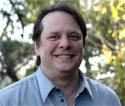
Don Macleay

For one of the race's lesser-known, less-funded candidates, small-business owner Don Macleay has been working hard to make his presence known. He was among the first to officially declare his candidacy, has set up a web site and blog as active as some of the campaign's front-runners, and his schedule shows him crisscrossing the city for a full slate of public forums, press conferences, and appearances. He also has a developed organizational infrastructure behind him in the form of the Green Party brand name, as well as a dedicated campaign manager, Orlando Johnson, who also entered the race before dropping out. Although at 43, he has never run for office before, he says he's interested in being a career politician and is trying to lead his candidacy in a professional way. "I don't see anything wrong with being a professional politician or being a policy wonk," he said. "I'm trying to be ready to win the election."

In a race crowded with bigger names, this will, of course, be an uphill battle. He has yet to rack up any big-name endorsements, and as of the August filing deadline had only raised $1,607 in the first six months of 2010. (He also drew criticism from some local bloggers early on for what some saw to be positions antithetical to Green Party philosophy, including doubts about Bus Rapid Transit.) Currently the manager and majority owner of a small computer networking company, Macleay touts his administrative and technical skills as a machinist, independent businessperson, and electrician, as well as his experience as a local activist, volunteer, and longtime resident. "I was telling Rebecca Kaplan the other day that I could take one of her fuel cell buses apart and put it back together," he said. "I have a common citizen's view of a lot of this. I have a manager's view and a working-man's view. I have a better mix of skills for making these decisions."

As for his platforms, Macleay said, "the sound bite is 'schools up, crime down.'" What that means practically is that Macleay would like to see schools used more like civic centers, and set up afterschool support systems for truant students, though he's emphatic about not wanting to interfere in schools' operations and has expressed skepticism about charter schools. He also told the Express he'd consider suspending the city's redevelopment agency and putting the money into schools and the general fund.

As for the second half of the sound bite, crime, Macleay is a strong proponent of restorative justice and community policing — a Green Party tenet — and in this regard places himself to the left of Kaplan and Jean Quan. In a statement released last week and coauthored by Kaplan, he advocated for more civilianization of the police department, though he has yet to take a stance on the exact number of police officers the city should have.

Macleay said he believes the city's budget problems are too complicated to be dealt with piecemeal, so, unlike other candidates, he'd like to reform the city's budget and charter by calling a budget convention and implementing a "pay-as-you-go budget." He'd also like to cut a deal with the police to put an end to pensions that aren't funded, and proposes changes to the city's zoning and permitting processes to further attract small business.

Saturday, October 16, 2010

Are we allowed to say that our schools are in crisis?

Re: Questions about the school system in Oakland
Posted by: "detta" dmacleay@earthlink.net babel1958
Thu Oct 14, 2010 5:52 am (PDT)


Dear Chris, Kate and list readers,

For the last 10 months I have been listening to our mainstream politicians pretend to talk about our problems. Most of the time they give the kind of "correct image" answers that play down the harsh realities in Oakland. They especially play down the harsh realities that affect our youth of color.

If you want career politicians who will tell you what they think you want to hear, you are well served in this election.

I am less worried about fixing our image problem in Oakland and a lot more worried about fixing our problems.

My opinion is that we have to do better and should not put up with these high school truancy and dropout rates. I also do not feel that what has been done so far is even half way up to the task.

In some ways I am an old fashioned kind of guy. The way I see it we have to face the facts in order to deal with them. The things that are going well are not what needs to be urgently dealt with. The projects and programs that show hope and promise need to be nourished and cultivated like the best plants in a garden. They should not be used as a way to make things look better than they are.

It would be very hard to convince me that the city could not do more to support our youth and families and improve the atmosphere at and around our schools. Add to that the other two crisis hitting our youth, crime and jobs, and I really can not think of what should be more important for a Mayor of Oakland.

We all know that as a Green Party candidate for mayor, the odds are against me. Part of why I do it is to keep talking up the issues that the professional politicians would rather play down.

Thanks

Don


1b.
Re: Questions about the school system in Oakland
Posted by: "Christopher Vernon" vernfami@pacbell.net vernfam
Wed Oct 13, 2010 8:41 am (PDT)


Hi Don,

Yes, problems abound, many of which originate outside the schools, but it's concerning when a mayoral candidate puts forth what seems to be such a one-sided, unnuanced view of the situation in OUSD (think Jerry Brown?). I think that is part of Kate's point.

I agree that many of the problems you reference and the difficulties in addressing them stem from lack of adequate resources in comparison with the German schools. And, yes, that does give me pause. But, like Kate, I'm pleased that my kids and their friends have largely flourished in OUSD schools and that a number of OUSD schools are functioning well in the face of unbelievable odds.

Chris Vernon
Oakland Tech parent

--- On Wed, 10/13/10, detta wrote:

From: detta
Subject: [oaklandpublicschoolparents] Re: Questions about the school system in Oakland
To: oaklandpublicschoolparents@yahoogroups.com
Date: Wednesday, October 13, 2010, 5:58 AM


Everything I said here was from information provided to me by the Oakland Police, the OUSD or Ms. London.

And I did not mention the killings, such as the killing of one of my friends' son two weeks ago stemming from a school fight, or the fact that in some areas the parents can afford to create opportunities for the students after school and in some areas they can not. Our violent crime rate can be as much as 10 times that of Germany.

Other readers have told me that I did not go far enough.

No this is not part of any campaign, but the contrast between schools in the USA and schools in Germany should give us all pause.

The fact that conditions at many of the jobs available for our youth would be illegal in Germany should also make us reflect.

I have two sons in the public school system, one in Oakland grade school and have a lot of good to say about what we are doing here and the improvements over the past few years. But we should not kid ourselves about how we place on the international scale, we should look at what others have shown to be possible and be able to do as well here. I believe that we can.

Re: Questions about the school system in Oakland
Posted by: "Kate Rix" katerix@comcast.net kathrynerix
Tue Oct 12, 2010 12:21 pm (PDT)
Don Macleay:
What exactly is the point of this?
Your summary of Oakland Public Schools is exaggerated, distorted and inaccurate. Why would you want to give a foreign student, or anyone for that matter, this picture of our city's schools?
Is this actually part of a mayoral campaign?

Kate Rix
Oakland native and parent of two children thriving in Oakland Public Schools

Walk Oakland, Bike Oakland, Questionaire

Oakland City Council and Mayoral Candidate Questionnaire

November 2010

Contact Information

Candidate’s Name: Don Macleay

Telephone: 510 290-1200

Fax: 510 645-1800

Candidate’s Email: candidate@macleay4mayor.org

Website: http://macleay4mayor.org/

Campaign Manager name: Orlando Johnson

Campaign Manager phone number: 510 866-7488

Campaign Manager email: Orlando@macleay4mayor.org

Lifestyle and Culture

1. What initiatives would you develop or support to continue the growth of cycling and walking as every day modes of transportation in Oakland? (150 words or less)

I have not made a study of this. This answer is mostly based on personal experience. My main concern is to upgrade the type of bike path we set up and have safer places around town. Quickly following that I think we are still far away from having safe, convenient bike parking at most business and transit locations.

2. Do you support establishing a pedestrian and cyclist safety campaign in Oakland? (Yes/No)

I do, but I think the infrastructure plays a big role.

3. Do you bike or walk for regular transportation? If so, for what purposes (commuting, recreation, errands) and how often? Please indicate how you most commonly commute to work. (300 words or less)

It depends the weather, the destination and if my 7 year old son is with me. I live upstairs from my work and can walk to most of my shopping, health care, dining and entertainment. I drive very few miles and my 94 has only 78K on it. That car sits for days at a time.

Most of my trips are walking, downtown bike trips are a couple of times weekly most weeks. Since I have been running for office I have needed to use the car more.

I bike a lot between Temescal and downtown/Chinatown/Old Oakland and Lake Merrit for my work or to go to things like Art Murmur.

I only bike with my son on small side streets over to Mosswood or inside of Temescal. By and large I find the “bike lanes” unsafe for a small child. A lot of them I find unsafe for myself and try to use smaller streets when I can. I used to take the bus from 40th and Broadway, but now find the service too infrequent and unreliable, so I bike more often.

Most of the time I take the car it is to pick someone up who would be very delayed by using public transit, or to get somewhere that is hard to get to, or for questions of safety, speed and access.

Infrastructure

4. In your opinion is Oakland a bicycle-friendly city? (Yes/No)

Not in the way the bike paths are done, but yes in the way the public views bike use.

5. Do you support increasing funding for the City’s bicycle and pedestrian programs and projects? (Yes/No)

Yes after we clean up some of the mess. The safety of some of the current projects give me pause and the result over costs makes me wonder if we are not loosing a lot of revenue to the planning process that would be better spent on the bike paths, cross walks and signage.

6. For generations, State, regional and Oakland policies have prioritized traffic flow and space for private motor vehicles, to the detriment of walking, bicycling and transit. Around the world, many cities are reversing this priority and using the following hierarchy in transportation planning; pedestrians first, then bicyclists, transit vehicles, and lastly private motor vehicles. If elected, will you support this new hierarchy in the City of Oakland? (Yes/No)

I am opposed to ANY increase in the road infrastructure. Our nation needs to urgently put all of our transit resources into mass transit. This is an urgent problem for global warming, pollution, resource waste and quality of life.

7. If elected, will you help achieve the goals of Oakland’s Bicycle Master Plan and Pedestrian Master Plan? What would be your top three priorities for implementation in each of these two plans. (500 words or less)

I am not too familiar with both of these Master Plans.

I was very disappointed in the quality, cost and time delays, not to mention the quality of the final decisions that went into the 40th Street bike lane plan that is to run in front of my house. I heard the master plan quoted a lot during the public meetings and did not get a clear picture of what it is.

I really hope it is not another one of our city’s over elaborate, over budget plans.

As a regular rider my general feeling is not that some great plan is moving forward, but that could be the funding and permitting and not the plan itself. Some of the stuff I have seen looks very good and other parts seem dubious.

8. How would you prioritize the implementation of Oakland’s Climate Action Plan. If elected, what would be your top three priorities for implementation in this plan. (200 words or less)

1 Better zoning for live/work, walk-bike-bus to work neighborhoods. The lowest carbon footprint in the form of transit and commute is the one you do not have to take. My situation should not be a luxury or a stroke of luck, we should make it a lot easier to live locally.

2 Better building code and permitting. Simple things like skylights, and more advanced projects, such as photovoltaics should not face the current obstacles. The use of “gray water” is illegal for all practical purposes.

3 Trees. We need to line our city streets with trees. We need to buffer our freeways and pollution sources with trees. We need to use trees for our sound barrios. We need to use gray water for those trees and we need to plan native vegetation that will resist drought and require less upkeep.

Additional Thoughts

Are there any additional thoughts that you would like to share regarding bicycling and walking in Oakland?

As a long standing Green Party member, this is the kind of issue that is dear to me. As an Oakland Community organizer I want to mix these needed projects into the integrations programs, education projects and jobs we need to address the crisis that affects our youth.

The changes we need to make on where we work and how we get there are crucial and we need to avoid that becoming in any way in conflict with our URGENT need to address crime, education and employment. It should also not become a false trade off with economic development as a whole.

The city planning process is in need of an upgrade. Our transit goals should be part of that better management we have to provide the public if we are ever going to build an atmosphere of public trust in government. Bike infrastructure is very visible and we need to make sure it LOOKS viable, well thought out and practical to the average resident when they see it.

Tuesday, October 12, 2010

My answers to a German-American high school student about Oakland Schools.

On 10/1/2010 9:04 AM, Nicole C-----------i wrote:

Hi Don,

How are you doing? My summer was great. I went to Morocco for two weeks (and actually spoke some French). That was an amazing trip. School started two weeks ago, and everything is getting really busy. The teachers all expect so much from us, because junior and senior year count towards our end grade. Drama started again as well. We just got our lines for the play “The Importance of Being Earnest” by Oscar Wilde today.

Well as I said, school is getting really busy and I have to hold this huge presentation in my English class about the American school system. In this presentation I will tell them how the school system is set up (elementary school, middle school, High school), I will tell them about the differences to the German school system and then I wanted to show them why schools in richer areas often get more money than schools in poorer areas. You explained it to me once, do you remember? That the schools get money depending on how many students attend the classes a day. I thought I would explain this using the example of Burlingame and Oakland. I know you must be really busy, but you would do me a HUGE favor if you could answer some of the questions bellow really briefly (obviously only if you have a moment). If you don't know the statistic stuff, no problem...

thanks,

Nicole


Does the schools’ low financial support in Oakland have an effect on the crime rate in the city (especially concerning teenagers)?

I think it does. The degraded schools are not very attractive to young people. There is little outside of rote learning. There is nothing in the way of vocational training. Arts, music and sports are cut back and close to non-existent. After school programs, clubs, excursions and the like are very limited in scope. In this atmosphere we have an extremely high truancy rate. It is said that as many as 50% of our high school students are chronically truant. The funds for programs to reach out to these families whose students do not regularly attend school are cut way back and in many cases truants are treated as a police issue.

Is it then any surprise that a high percentage of students never finish, or if they do, they do not qualify to graduate?

This is much higher among our black and Hispanic students.

The percentage of young people from these communities who end up going to jail is disproportionately high.

And I feel that a big part of the reason is that the schools did not offer much and did not offer any path to employment.

What do you plan on doing to improve Oakland’s public schools?

I want to bring more resources into the schools as civic centers. That means locating public libraries and parks as part of the school infrastructure. That also means getting more City neighborhood projects to be part of the school infrastructure. Note that in our area, there is one government for the city, the City Council and Mayor and another for the schools, the School Board.

What alternatives are there to Oakland’s public schools? Can parents send their kids to schools in other districts?

One alternative is private schools. Private schools are expensive, but a lot of parents, especially white and Asian parents do that. There are school choice programs inside the school district. Some students can apply for a district transfer. Divorced parents can choose which one of the parent's school district the child will go to. Oakland also has some charter schools. Many of the "choice programs" are used as a way to get out of bad schools. The "no child left behind" laws based on standardized, high stakes testing punish the low performing schools and give parents reason to leave them. There is not a real system by which the schools most in need get the most help.

What exactly are the disadvantages of Oakland’s schools?

We described the lack of resources above. Add to that a social situation where crime and violence spill into the schools and you do not have a formula for success.

What are advantages of Oakland’s schools?

This school district is improving despite the bad conditions. There are a lot of dedicated staff and volunteers putting time and money into the system. There is also a wide diversity of programs and cultures making up the district. A parent who pays attention and who puts in volunteer time can still make sure their student receives a quality education, especially at the younger grades.

On an average school day, how many kids cut lessons in Oakland?

I am not sure. The number that the school district gives us is 50% chronically truant. My guess is something high, maybe 5 to 10% for at least some of each day. Note that my local police tell us that home robberies and break-ins increase when our local high school is in session.

What are reasons for kids cutting school in Oakland?

I think that there are a mix of reasons. A lot of youth have trouble at home or in their neighborhoods. Many come to school unprepared for class, without their work done and with no real chance of catching up. A lot of youth cut class to do more fun things, such as have sex or smoke pot. There is a significant number of young people who are involved in harder drugs, more crime and the sex trade. Some of our youth are parents before graduating high school.

Another reason that I think is relevant, is that the reasons for going to school for many youth are not so obvious. It is not very fun, we do not teach much in the way of useful life skills, we do not teach job skills and most of the interesting programs are too small to have much of a chance of getting into them. The US school systems right now make a big deal out of COLLEGE as the main goal. Well, then what happens to the majority who will not go to college? This lack of options and future may not be obvious to many in our government, but it is crystal clear to young people who will not see college and do not stand much of a chance of getting a good job.

When saying this, the German public needs to keep in mind that many Americans have jobs that do not offer health insurance, do not provide vacation time, do not pay well and provide no opportunity for advancement. In the US to say "working for McDonald's" means having a job that provides nothing and goes nowhere. You do in only because you are desperate for money and you are being ruthlessly exploited when you are there. The conditions that many young Americans, especially young Americans of color, work under are illegal in the BRD.

How many kids drop out of high school?

They don't tell us. One of the games that is played is bad management when they do not want the numbers to reveal the bad news. There is no real tracking. School districts do not take any responsibility for tracking students who do not turn up at the beginning of a school year. Looking at the population as a whole, we find that in many of these communities about half of the youth in the 20's have not finished high school. There are a couple of equivalent tests, but they do not mean much unless the student passed out of high school to go to Junior College. Most who pass the test do not go on to adult education.

Wednesday, September 29, 2010

Kaplan & Macleay Response to Questions regarding CPRB

Response to Questions from PUEBLO regarding CPRB From

Mayoral Candidates Don Macleay and Rebecca Kaplan

Questions:

1. If you are elected Mayor, do you commit to ensuring that the
Citizens? Police Review Board (CPRB) will continue to be funded by the
City? and

2. Do you commit to providing sufficient funding to allow the
CPRB to staff up to enable them to receive all citizen complaints.
This policy change, approved by the City Council overwhelmingly, would
allow for the redeployment of at least eight IAD officers to be
reassigned to functions that promote public safety and will become
cost-neutral by the third year and cost-savings thereafter.

RESPONSE:

We are writing jointly with our shared vision and plan to preserve and
strengthen civilian police review and improve public safety in
Oakland.

By Don Macleay and Rebecca Kaplan.

First, we would like to make clear that our answers to the two
questions above are both an unequivocal and strong Yes. Furthermore,
we have discussed this issue at length and want to make it known to
the public where we stand on the issue of the relationship between the
police the public.

Public safety is an essential goal for our city. All parts of our
community must be safe. Ensuring widespread public safety requires a
coherent set of actions, including effective use of police resources,
violence prevention, and strengthened community-police relationships.

Maintaining and strengthening the Citizens Police Review Board (CPRB)
is vital, not only because it is legally-mandated, but also because it
is good public policy and it is fiscally responsible.

>From a public policy perspective, we believe in the principal of
democratic civilian control, including over police. It is incumbent on
the elected officials, as the civilian government, to have the final
say over all police matters including, but not limited to, budgeting,
internal controls, and public complaints.

Intake of public complaints should be handled by civilians, for several reasons:

a) In order to provide effective policing, and to be fiscally
responsible, we should be working to ensure that as many police
officers as possible are deployed in a way that provides safety to the
public. When a task can be handled by a civilian, doing so makes it
possible to re-deploy sworn officers to the essential task of fighting
crime, while saving money due to the lower cost of civilian staffing.
Therefore, civilianizing this process is an important part of
providing effective policing for our city while reducing our budget
crisis for the long-term.
b) We believe that a member of the public who has been mistreated
by a police officer should have the right to speak to someone who is a
civilian when filing that complaint. A person who claims to have been
abused by a peace officer should not be forced to come to an officer
or be confronted by an officer in order to file their complaint.

c) Any reforms to the charter or budget should incorporate
principals of civilian control, review and oversight.

d) Our police officers work very hard, and should be treated with
respect, and should be expected to treat the community with respect.

In addition to the issue of handling complaints, we believe that
civilianization and improved connections with our local Oakland
communities should be used as a broader public safety strategy:

e) We propose that the police department itself become the
employer of more civilians. Trained civilians can do supportive
investigative work at the crime scene, in the lab, and in
neighborhoods. These strategies can be used to strengthen evidence
gathering and analysis, blight and illegal dumping enforcement, and
more. Use of trained civilians can help improve response times, ensure
that police officers are deployed to fight crime, and improve
community safety while balancing the budget.

f) We also want to see a police force with a higher percentage of
officers living in our city, which will improve neighborhood safety
and strengthen community-police relationships. Without violating legal
prohibitions on ordering officers to live in Oakland, we can improve
this situation by: recruiting Oakland residents to the police
department, including through strategies like the ?cadet? program;
providing homebuyer assistance to purchase homes in Oakland; and
ensuring that officers live close enough to respond quickly in an
emergency. In addition, we should ensure that a prior conviction does
not bar someone who has turned their life around from joining our
police department.

g) Lastly, we would like to add that there are additional
?civilian-based? strategies that should be strengthened to improve
public safety in the long-run, like Restorative Justice. Programs like
the McCullum Youth Court can be a very effective tool, by providing a
system in which victims receive restoration, and preventing a new
generation from entering the cycle of crime and revenge. People can
be held accountable for the harms they cause, and required to make
amends to those they have harmed, in a process that increases (rather
than decreases) the chances to then go on and lead a non-violent life.
h) Since California?s prison system is greatly harming our State
budget and our State economy, while simultaneously failing utterly at
the goal of ?corrections? ? with a recidivism rate so high that that
our incarceration system as a whole has actually been causing more
crime -- we must be willing to employ more effective options.

Monday, September 20, 2010

MakeOaklandBetterNow.org MAYORAL CANDIDATE QUESTIONNAIRE

MAYORAL CANDIDATE QUESTIONNAIRE

Please complete, sign and e-mail to

Oaklanders@MakeOaklandBetterNow.org

Candidate Name: Don Macleay

City Budget

1. Please state your position on the following November ballot measures:

Measure V (increased medical cannabis tax and new non-medical cannabis tax). Answer:

Measure W (telephone trunk line and access line taxes). Answer:

Measure X ($360 parcel tax). Answer:

Measure Y (suspends police staffing appropriation requirements for collection of 2004 Measure Y parcel tax). Answer:

I have the same answer for all four. These tax measures are a bad idea, product of a bad budget process. Despite that I will vote for all four of them. My view is that we have to decide if the hardship of the new taxes is worse than the hardship that the budget cuts will cause. If these measures do not pass, key city resources will become even more substandard during a time when the civil society is least able to help out.

Some feel that voting these taxes down will “draw the line” or force city hall to clean up its act. If that were true the budget mess in Sacramento and in many of our California cities and counties would have been solved years ago. Reform will be done by electing reform minded officials, not by sending some vague negative message voting ballot initiatives up or down.


I answer questions 2, 3 and 4 together, because my proposals link them together. They are part and parcel of a flawed budget process.

2. In June, the City Budget director reported that Oakland faced a five-year general purpose fund structural deficit of $589 million. (See page 19 of City Administrator’s report at http://tiny.cc/5jytp and a spread sheet adding the numbers at http://tiny.cc/9sowf). After the City Council’s recent budget amendments, much of that structural deficit remains. As mayor, what steps will you take to eliminate that deficit? Answer:

3. Budgeted expenditures reflect a city’s priorities. When you present your first budget to the City Council for consideration, what current city functions will you give the highest priority, and how will your proposed budget reflect that prioritization? For what city functions will you reduce or eliminate expenditures? Answer:

4. Each of the city’s labor agreements will open during your term as mayor, which means that wages and benefits will be up for negotiation. As mayor, what will be your plan for balancing the city’s interests in maximizing taxpayer services per tax dollar and retaining and attracting skilled and motivated employees? Answer:

I think the city administrator has the facts straight.

If elected, I will call a budget summit, and kind of budget “constitutional convention” where we put the whole budget on the table. A mayor who convenes such a summit can not predict or dictate the outcome. What I will advocate in the process will include:

  • Negotiate a transfer of the existing retirement plan to the employees.
  • Start a new retirement plan that pays its liabilities on pay day.
  • Have a plan for the ups and downs of the business cycle
  • Focus outside funding on LONG TERM infrastructure projects.
  • Mandates, such as Measure Y need to become part of the law and policy of city government, but not the budget handcuffs we now have.
  • Prioritize civilian services to abate, reform and prevent crime.
  • Prioritize city services that most improve the quality of life.
  • Set budget goals that stabilize the different departments.
  • Increased independent oversight and auditing.

Working for the city should be a good, stable job. Maybe not the best paid, but with good conditions, good benefits, security and the room for city employees to treat their jobs as a vocation and as a social service. This has been the deal for public employees. We need to increase the partnership with our city workers, as represented by their unions in order to restore this promise. As each city contract comes up for negotiation we need to keep this goal in mind. Staff is a big cost, but remember that it is nor an evenly distributed cost. We will not get the partnership we need from our employees and our unions if we do not live up to this promise of good conditions, good benefits, JOB SECURITY and a positive working environment. If we do, then we can work out viable contracts.

A new budget and a new budget process will need to be taken to the voters for a mandate,
for an authorization to change the tax plans and to allow it to replace the mess we now have.


Public Safety

5. Under recent adjustments to the 2010-11 budget, 120 police officers are scheduled to be laid off in January 2011 (in addition to the 80 laid off in July 2010) if Measure V, W, X and Y do not pass. If you are elected in November and these measures are not enacted, will these layoffs take place? If not, what specific budgetary steps will you take to prevent them? Answer:

If I am elected and the budget items did not pass, I will have to declare a budget emergency.

That may end up being a good thing if the process leads to a real budget reform.

There are many things we can do; to be specific does not make sense because the real budget outcome will be the result of a series of government and union negotiations and a complicated political process with our city council, our county and our state.

EVEN IF THEY DO PASS WE HAVE A HORRIBLE PROBLEM and the next mayor should treat our public safety budget as an emergency on day one. It has been an emergency for a long time.

6. Several citizens groups have advocated “civilianizing” police functions that do not require the use of sworn officers, arguing that using civilians for such functions as police misconduct complaint intake, press relations and property crime investigations can substantially cut personnel costs and maximize the availability and effectiveness of sworn officers. Chief Garcon of San Francisco implemented civilianization in Mesa, Arizona and has begun doing so in San Francisco. Do you support civilianization, and if so, for what functions? Answer:

Yes to the civilian jobs and yes to the civilian oversight, but they are two different questions.

The police needs civilian employees to do police work. The back end of investigations (such as fingerprinting, data collections, background research) , community policing, restorative justice, truancy control, substance abuse issues, homelessness, parolee outreach and mental health issues, just to name a few, would all be done well, if not better by a trained civilian. Those civilians should have more appropriate training to their tasks. Social service support will allow the uniformed, armed police officers to focus where they are most effective. Currently they waste a lot of their time.

Civilian oversight of those in uniform is a basic fundamental of American Democracy.

It gives the civilians the guarantee that no-one in uniform is above the law and it gives us collectively the ability to review what our police are doing in a checks-and-balance system.

I not only advocate independent civilian oversight of the police, but I think we need independent oversight of ALL of the city departments. Nobody should be in charge of their own cookie jar. Every staffer, and every outside vendor and contractor should be inspected, reviewed and supervised.

I will propose that we enhance the Auditor’s office to an Audit, Review and Oversight office.


7. At the end of your first term as mayor, how many sworn police officers do you believe Oakland should have, and what steps will you take to accomplish that goal? Answer:

I have no idea and have no target number. I think dreaming one up is just posturing.

We need to see what funding we have, we need to see what jobs become civilian and we need to do something about the large amount of overtime hours we now pay.

8. In recent years, key components of community policing in Oakland have been the interactions between the Measure Y Neighborhood Beat Officers, Neighborhood Safety Coordinators, community members and Neighborhood Crime Prevention Councils. The Neighborhood Beat Officers have now been eliminated, and the functions of the NSC’s have been consolidated. To what extent do you believe community policing is important, and if you believe it is important, how can it be accomplished in Oakland? Answer:

I am an avid member of my own NCPC, a strong supporter of Beat Officers and the Problem Solving Officers. My own now works somewhere else. These last layoffs, followed by the decision to sacrifice community policing in favor of patrol duty has done a lot of damage. This is a case of short term, hand to mouth; budget thinking causing us to lose much of what has been painstakingly accomplished over the last few years.

You can find my statement on public safety here:

http://macleay4mayor.org/macleay-on-public-saftey.pdf

To answer the question directly, I think the public outreach is the LAST thing that they should ever cut and for some reason it is always the first one. There is no law enforcement – crime study to support doing this. The research on restorative justice is the same. At its worst, restorative justice never does worse than the current revolving door jail criminal justice system at its best.

I agree with the goals of Prop Y, but not Prop Y itself.

To start with community policing and community sentencing COST LESS than standard policing.

So why do we need more funds to make this policy work?

Richmond did not, they are saving money and making headway using community policing and did not need any Prop Y equivalent to get going. They just got a mayor and a council that would stick to the policy and hired a chief of police who wants to do it. http://articles.sfgate.com/2009-01-13/bay-area/17198437_1_patrol-districts-richmond-police-address-problems

I plan to be such a mayor.


Public Works

9. In its April, 2009 performance audit of the Oakland Public Works department (http://tiny.cc/afihq), Matrix Consulting Group, which conducted the audit, recommended that:

a. The City should be replacing or rehabilitating an average of 1% to 2% of its sanitary sewer mains each year” at a cost of about $7.5 million; and

b. The City should be spending approximately $30 million annually for the repair and replacement of the City’s streets (at the time of the audit, the annual expenditure was $7.2 million).

Matrix also noted that the General Purpose Fund contribution to the Public Works budget was far less than that of comparable California cities, and made a series of recommendations (at pages 24-25) for adequate funding of the city’s public works needs. Which of these recommendations do you support, and how will Oakland meet its obligations to repair and replace sanitary sewers, streets and infrastructure if you are mayor? Answer:

This is exactly the kind of issue that makes me think we should have a budget reform and better oversight. This is not the only Auditor’s report worthy of attention. The report on Hiring Practices should also be part of our discussions when electing our next mayor.

Our local library, which houses the tool lending library is badly damaged because of the state of our sewers. Many other examples abound, but here in Temescal, this one stands out.

As part of the budget reform that I propose, we need to include this. I am not sure how we can deal with our infrastructure problem without a reform. If we ever get to the point that we actually will put money aside during good times and spend it during downturns in the business cycle, then we could do this in spurts about every 10 years when unemployment is high.

Another source of funding MAY be the stimulus funds and the redevelopment funds, but the get them focused on real long term infrastructure instead of speculative projects is a reform of its own.


Management, Leadership, Accountability and Transparency

10. Oakland is a large and very complex entity with a $1.1+ billion budget and thousands of employees. Please describe:

a. Your specific experience that qualifies you to oversee an enterprise of this size and complexity;

b. Your theory of management, with examples of how you have applied that theory;

c. Your philosophy of executive leadership, with examples of when and where you have shown that philosophy. Answer:

I am running for Mayor. I am not running for City Administrator. The reason that I feel ready to do the job is because I am ready to provide political leadership to the residents of Oakland and the employees of the City. To that end I have a lifetime of political activism and leadership that I will bring to bear on leading the city. My knowledge of the languages spoken in Oakland gives me perspective inside many of the communities here. My mix of a working class background and current life as a small business owner gives me affinity with a cross section of social classes. When I speak with the unions, it will be as representative of the city, but also as a dedicated union member. My technical background will be a major contribution as our city plans projects in a time when America is changing the technology of its infrastructure. My environmental background puts me at the leading edge of the major problems of our time. As a trade school graduate and a trade school teacher, I know what our young people are going through in this job crisis and I have a good idea of what needs to happen to really provide training.

But the most important things I have to offer the people of Oakland are a vision for the reform of our city, the will to do it, the ethics to keep on course and the independence to stay and advocate for the city of Oakland and only the city of Oakland.

11. The City Administrator is the day-to-day head of city government. What criteria will you employ and what qualifications will you look for in appointing the City Administrator? Answer:

The three sub questions above would make good questions for a potential city administrator.

What I will do is search first among people closer to the process, including among my fellow candidates for mayor for talent. I do plan to hire from within. I also plan an administration that includes the people who contested the election. We will need a unity government.

12. What will you do as mayor to ensure that your agenda is being executed? Answer:

Outreach. I will be the kind of mayor who is at the council meeting, goes to Sacramento when needed, meets with the business community, who reviews all the open contracts for compliance, who calls, comes and acts. In other words, a mayor who is on campaign for the agenda all the time.


13. What metrics or benchmarks will you establish for your performance and the performance of City department heads? How will Oaklanders know whether benchmarks are being met? Answer:

The next mayor has to fix the budget. All Oakland will know how well we do.

They will also know how safe the streets are.

They will know if they have jobs.

And they will know how well the schools are doing.

14. How can Oakland’s television station, its web site and other media be used to more effectively inform and engage Oaklanders concerning city government activities and issues? Answer:

Do you mean KTOP or Channel 2?

The answer to KTOP is to make it more available, and make it more relevant, mostly on line.

The answer to Channel 2 is to turn the current situation on its ear. The press should not be asking where the mayor is, the mayor should be on the ground asking where the press is.

15. Should the City be taking other steps to more effectively engage the citizenry in city issues, and if so, what steps? Answer:

Good leadership should always encourage the public to be engaged, empower and informed.

I think that there is a lot of room for changes to how we deal with our grass roots groups.

Have we considered ELECTED neighborhood committees? Ones with some control and budget?

Are we looking at our council districts? Do they represent the neighborhoods or cut them up?

This question makes me want to ask the questions of why the public is not more effectively engaged and start knocking down the barriers to public service and civic involvement.

As mayor I will be asking this question of the public and taking the time to listen to the answers.


Economic Development

16. Many Oakland candidates and office-holders express the opinion that Oakland city government systemically business-unfriendly. Do you agree or disagree? If you disagree, explain how the city has established a favorable climate for business development. If you agree, describe what you see as the systemic problems and explain how you, as mayor, would fix them. Answer:

I disagree, but I know why business owners feel this way. The problems come in how we handle Permitting, Zoning, and Code and from having the highest business taxes in the Bay Area. There are times when asking for an authorization to put up a sign, to sell beer in a restaurant, or adding a pizza oven becomes a ridicules series of trials and tribulations. The new Business Assistance Center is a beginning of moving things in another direction. The taxes are another issue, and would be accepted if we had the advantages of city life more in the front and the disadvantages more under control.

That the city administration needs to become user friendly, is without any doubt, but to call that “anti-business” is a bit of a stretch. There are a long list of home owners, non-profits organizations, artists and other groups will tell very similar stories of frustration dealing with the city.

17. What, if anything, does Oakland have to learn from Emeryville, Berkeley or other cities about how to effectively use Enterprise Zones and redevelopment funding to attract and retain businesses? What, if anything, have other cities done that Oakland will start doing if you are mayor? Answer:

On this I will keep quiet for the most part, but there is much for us to learn from others.

San Jose has made some strides in Restorative Justice.

Richmond moves forward with some good ideas in policing.

A local enterprise zone took in companies that could have been here.


Other

18. What, if anything, can Oakland city government learn from other cities about how to maximize its ability to provide quality services to its citizens in difficult economic times? Answer:

I would like to have us open our view and not only look around our area, state and country, but also look around more internationally. Many parts of the world do a lot of civic improvement without spending so much money, because they never had it. Our core communities include a large number or Mexicans and Central Americans who have personally experienced different urban models that are closer to us than New York and more relevant to our way of life. All of our immigrant communities have stories to tell and can show leadership in brining in fresh ideas. Oakland has personal contact with such ideas, so instead of just picking which ones I think are good, I would like to engage our grass roots groups to propose and hold up other projects as examples of what we would like here.

19. The majority of Oaklanders love their city, and believe it has unparalleled positive elements that are simply not recognized in the rest of the state and country, including history, diversity, and vibrant activity in its culture, arts, restaurants, etc. Does the mayor have a role in getting this message out there, and how should the city send this message? Answer:

I have been asked by a lot of journalists what I think of Oakland image out in the world, in the press and in our own eyes. That question has made me conclude that I will not work on the image. I will work on the reality. We need to get the schools further up, the crime further down, the employment and business environment more healthy and we need to value and nurture our multi ethnic community. If we do that, then the image will take care of itself.

Dated: Monday, September 20, 2010 By:

Don Macleay